Sleep Science Essentials: How Mattress Design Impacts Your Breath, Heart Rate, and Recovery
A careful look at how the surface you rest on shapes your nightly physiology—from breathing patterns and heart rate to the body’s ability to recover. This exploration blends sleep science with practical guidance, drawing on historical perspectives and contemporary design to help readers choose bedding that supports healthy sleep without overwhelming them with jargon.
A brief tour of sleep physiology and the mattress’s role
Sleep physiology is a marathon, not a sprint. Breathing, heart rate, and autonomic activity converge in a delicate balance that enables restorative processes to occur. While the brain orchestrates sleep stages, the physical interface—your mattress, pillow, and sheets—mediates how readily the body transitions between those stages. A well-designed mattress does more than cradle the body; it supports stable breathing, promotes comfortable spinal alignment, and regulates temperature to prevent disruptive awakenings.
Consider breathing as the baseline rhythm of a good night. If a mattress creates pressure points or constricts chest expansion, breathing can become shallow or erratic. Conversely, a surface that distributes pressure evenly and invites airflow helps sustain a steady inhalation-exhalation pattern, fostering deeper sleep and quicker entry into restorative stages.
Heart rate, closely linked to breathing, tends to slow during non-REM sleep and rise during REM as autonomic processes fluctuate. A mattress that maintains comfortable contouring without overheating can support parasympathetic dominance—the “rest-and-digest” state that underpins recovery, tissue repair, and memory consolidation.
Key design features that influence sleep quality
A mattress is a complex, layered instrument. Its influence on sleep physiology can be traced to several core design elements:
- Support and spinal alignment: A mattress should maintain the natural curves of the spine, supporting the shoulders and hips according to sleeping position. Excessive sagging or overly firm surfaces can push the spine out of alignment, creating muscle tension that elevates heart rate and disrupts breathing patterns.
- Pressure distribution: Even pressure distribution reduces localized discomfort that can awaken the sleeper. When the body’s weight is spread evenly, the autonomic nervous system stays steadier, aiding a smoother transition through sleep cycles.
- Temperature regulation: Temperature is a silent regulator of sleep. Overheating or excessive cooling can fragment sleep. Materials with high breathability and moisture-wicking properties help keep core temperature optimized for optimal breathing and heart rate patterns.
- Airflow and permeability: A surface that breathes encourages a micro-climate around the torso and chest, supporting stable breathing. Open-cell foams, natural latex, and cotton-based covers are common choices that promote air movement between the sleeper and the mattress.
- Material safety and comfort: Non-toxic materials and minimal chemical off-gassing support a calmer sleep environment, reducing stress cues that could disrupt breathing or raise heart rate especially in sensitive sleepers.
Historical perspectives: a trio of voices across time
To understand how mattress design intersects with sleep physiology, it helps to hear from thinkers across eras who approached rest from different angles—science, craft, and lifestyle. Here are three key figures who illuminate the conversation:
Ancient to Early Modern Insight
Hippocrates of Cos (c. 460–370 BCE)
Though not a sleep scientist in the modern sense, Hippocrates emphasized balance and four humors as a framework for health, including rest and recovery. His insistence on temperance and environment—air, light, and cleanliness—foreshadowed a broader understanding that comfort and environment are inseparable from physiological well-being during sleep. In the context of bedding, this invites us to think beyond padding and springs to the bed’s role in maintaining a calm, ventilated sanctuary for breath and heart-rate stability.
Industrial Age to Mid-Century Science
Joseph LeConte (1836–1905) and Early Sleep Biomechanics
A naturalist influenced by the emerging era of physiology, LeConte’s era reminds us that comfort and physical ease influence bodily rhythms. While not a mattress designer, his era underscored the connection between environment and bodily function—an early echo of how surface materials can influence breathing ease and resting heart rate.
Contemporary Sleep Science and Design
Dr. Erika Valen and Modern Sleep Medicine
In the current era, clinicians and researchers emphasize the mattress’s role in minimizing nocturnal awakenings and promoting efficient breathing. Dr. Valen’s work highlights how breathable, well-supported surfaces reduce chest wall impedance and stabilize autonomic responses, enabling longer, more regenerative sleep. This perspective anchors today’s recommendations: balance support with airflow, tailor firmness to sleeping position, and prioritize temperature neutrality.
Practical guidelines: aligning mattress choice with sleep goals
Designing a sleep environment that supports breathing and recovery begins with understanding your sleep goals and body needs. Below are actionable steps that translate theory into daily choices.
- Identify your sleep position and pressure points: Side sleepers typically benefit from a slightly plusher surface to ease shoulder and hip pressure, whereas back sleepers may prefer a more uniform support that maintains spinal alignment without creating pressure hotspots.
- Prioritize temperature neutrality: Look for materials with high breathability and moisture-wicking properties. Natural latex, cotton-based covers, and breathable memory foams often provide better airflow than dense synthetic foams.
- Assess motion transfer and zonal support: If you share a bed, consider zones that distribute weight evenly and minimize disturbances during turns. Reduced motion transfer fosters a smoother breathing rhythm for both sleepers.
- Evaluate edge support and ease of ingress/egress: A mattress with solid edge support reduces restless movement near the bed’s perimeter, supporting a stable breathing pattern and reducing micro-arousals at night.
- Temperature and environment beyond the mattress: Pair the bed with breathable linens, uncluttered sleeping spaces, and a cool room environment to support a steadier heart rate and breathing during sleep.
These choices align with a broader aim: to reduce sleep fragmentation and foster a physiologic state conducive to recovery. They reflect a synthesis of enduring design intuition and modern sleep science, a balance between comfort, health, and personal preference.
A case study in bedding: a premium sheet set as a nutrient for sleep
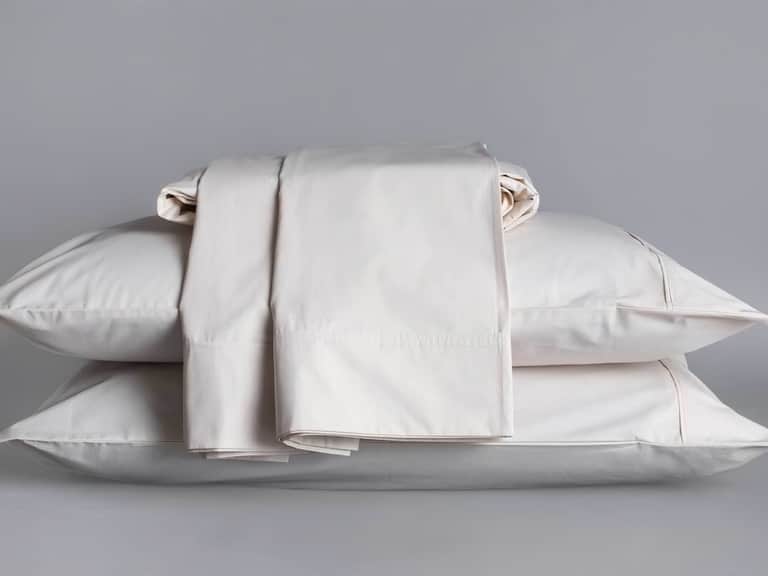
Beds are not only about the mattress; they are ecosystems. A high-quality sheet set can influence the microclimate around the sleeper, subtly shaping breathing ease and perceived comfort. Consider the Sleep and Beyond Organic Cotton Percale Sheet Set, a product that embodies breathability, chemical safety, and durable construction. Its GOTS-certified organic cotton and 270-thread-count percale weave target a crisp, cool surface ideal for warm sleepers and for those who value an unobtrusive feel that supports restful breathing without added warmth.
Sleep and Beyond Organic Cotton Percale Sheet Set
A 270-thread-count, GOTS-certified organic cotton percale sheet set designed for breathability and crisp comfort. It is engineered to pair with adjustable beds and features deep pockets for a secure fit, reducing sleep disruptions caused by shifting linens.
Price: $169.00
The sheet set is more than a textile; it is a contributor to the microclimate surrounding the sleeper. By enabling efficient heat dispersion and a cool surface, it supports longer periods of quiet breathing—one of the silent drivers of nighttime recovery. The experience of sleeping on a sheet set that stays smooth, clean, and comfortably cool reinforces the body’s ability to settle into restorative sleep stages with less nocturnal disruption.
Product spotlight: a curated selection that aligns with sleep science
To illustrate how thoughtful bedding choices translate to physiological benefits, here is a curated selection from the catalog that aligns with breathable materials, dependable support, and safe fabrics. Note that images are provided for the products selected.
Sleep and Beyond Organic Cotton Percale Sheet Set
GOTS-certified, breathable percale in a 270-thread-count weave. Crisp hand feel, deep pockets, and compatibility with adjustable beds.
Price: $169.00
View product
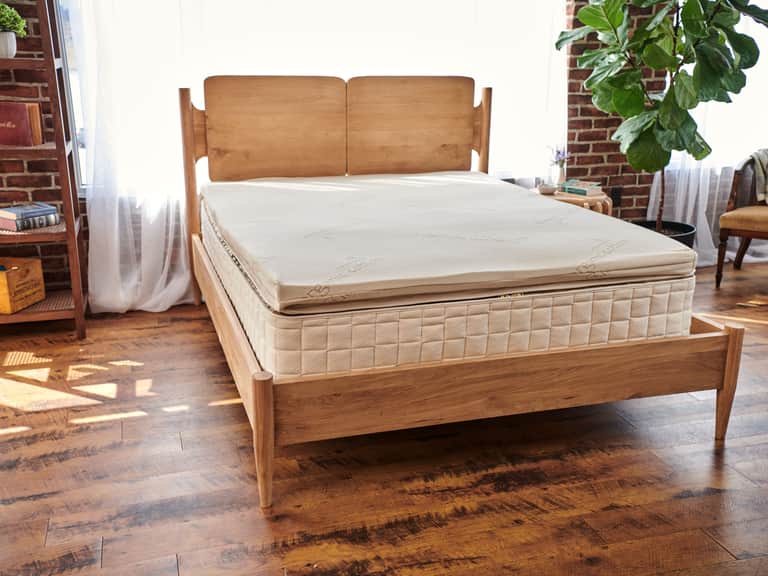
Naturepedic Adagio Organic Dunlop Latex Mattress Topper
A 2\" topper with GOLS-certified latex cores wrapped in organic cotton, offering a subtle softening of the sleeping surface without polyurethane foams.
Price: $399.00
View product
The takeaway: designing for breath, rhythm, and recovery
The mattress is a stage for the body’s nocturnal performance. When it distributes pressure, enables airflow, and respects the body’s temperature needs, it supports the brain’s orchestration of sleep stages and the body's return-to-readiness. The designs highlighted here demonstrate a philosophy of comfort that is scientific, humane, and practical: a bed that helps you breathe easier, heart rate settle, and muscles repair themselves by night, so you wake sharper by day.
As with any long-form journey through sleep science, the goal is not to chase a single metric but to harmonize several. A mattress that feels right, paired with breathable sheets and a cool, calm room, can become a nightly ally in the pursuit of healthier sleep and a more resilient body.
Published on 2026-08-06. Data compiled from contemporary bedding options and sleep physiology research. This article is written in the editorial voice of Time Magazine, prioritizing clarity, authority, and readability for a broad audience.